
Atlantis Aquaventure – Waterslide Support Corrosion Investigations
The Problem
Atlantis Aquaventure is one of Dubai’s major waterparks, with waterslide attractions supported by extensive structural steel assemblies operating in a continuously wet and highly aggressive environment. Signs of deterioration were identified across the waterslide support columns and assemblies, including coating breakdown, corrosion at baseplates and fasteners, deterioration of stainless-steel banding, and corrosion within hollow steel sections.
The steelwork was subject to repeated wetting from water leaks, overspray and splash exposure, along with the accumulation of debris and deposits. Laboratory analysis identified chlorides, sulfates and other corrosive salts in debris and waterslide water, contributing to an aggressive environment for the support steel and protective coating system.
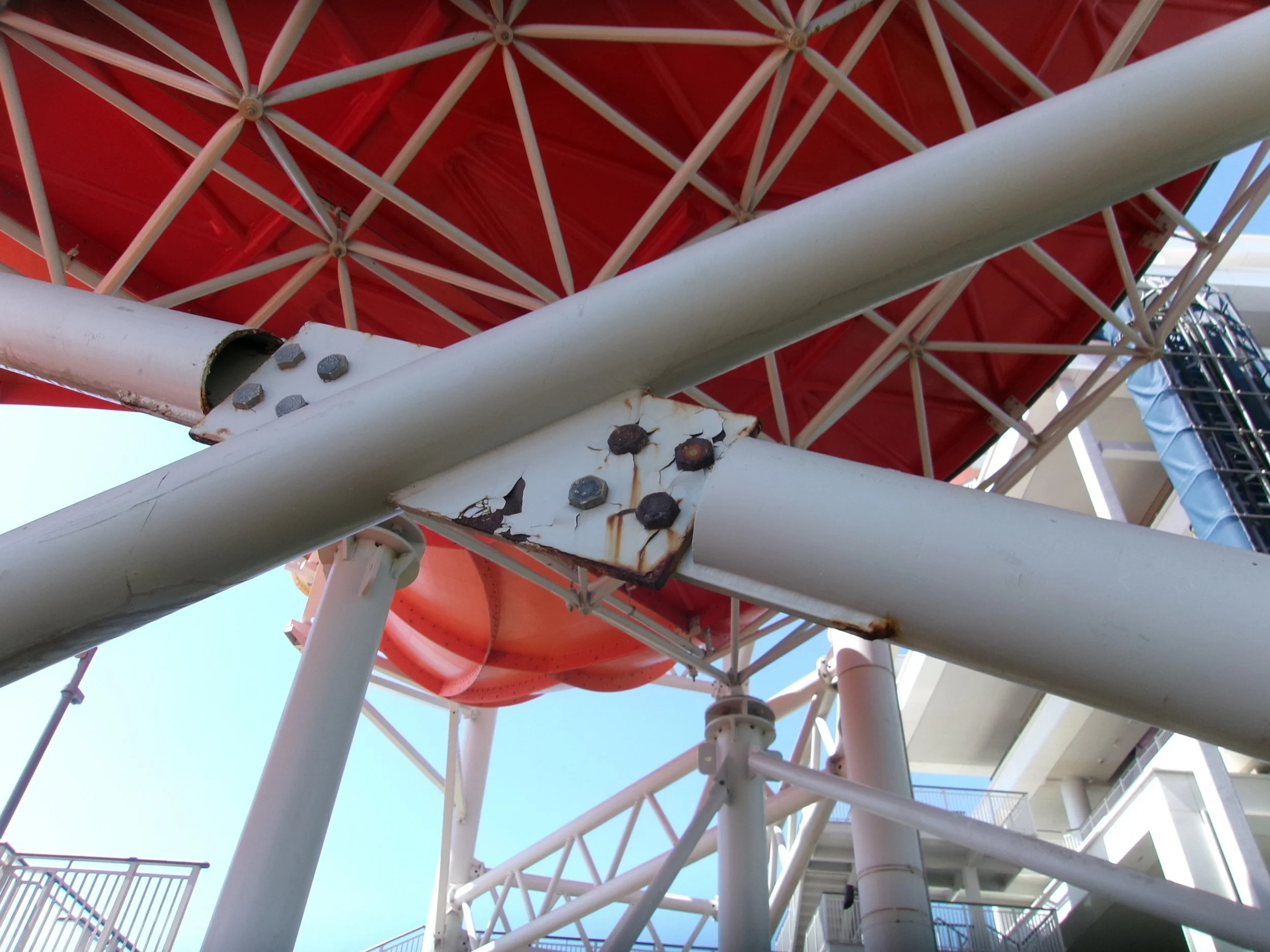
Corrosion at fasteners.
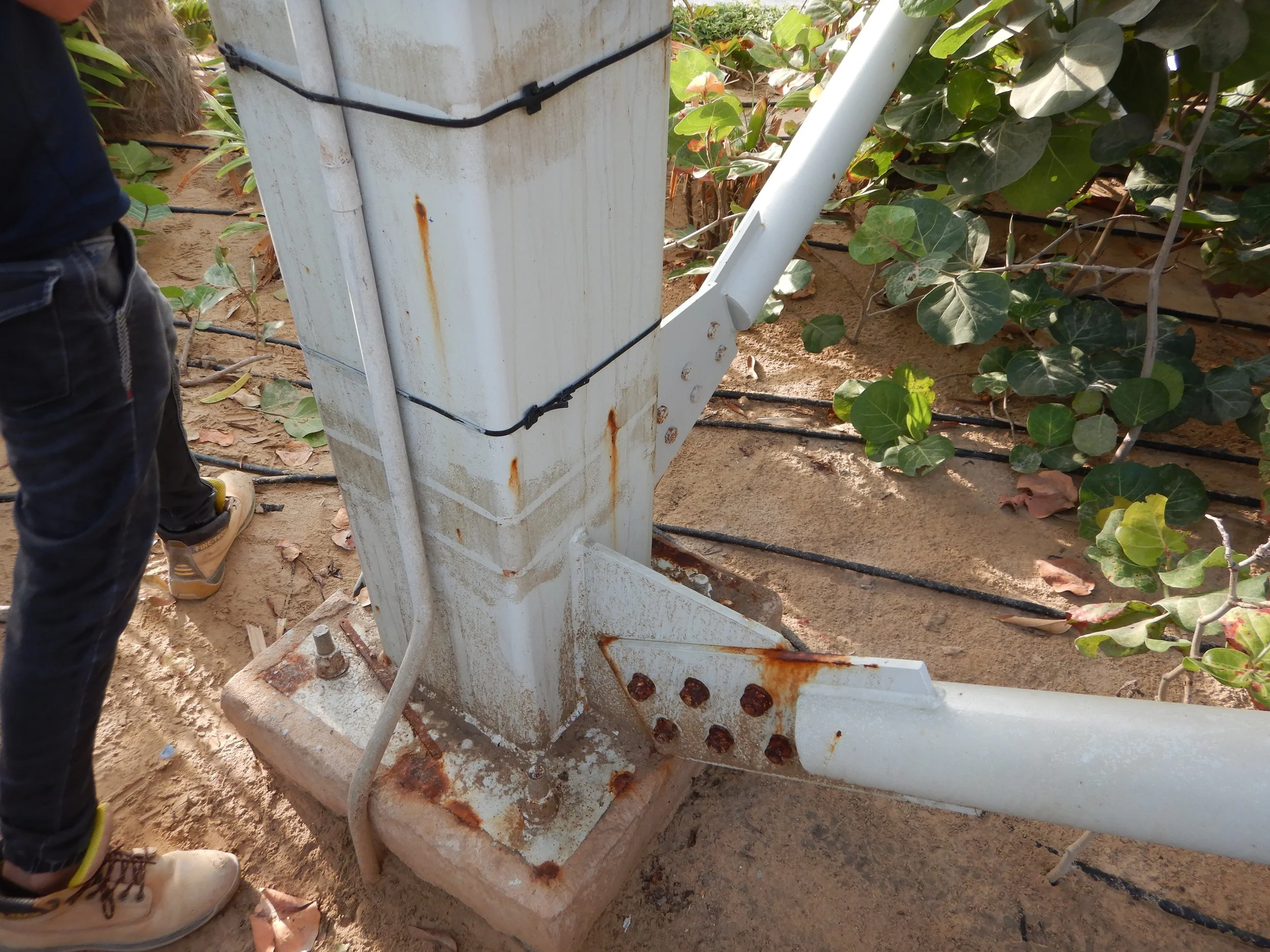
Corrosion at baseplates.
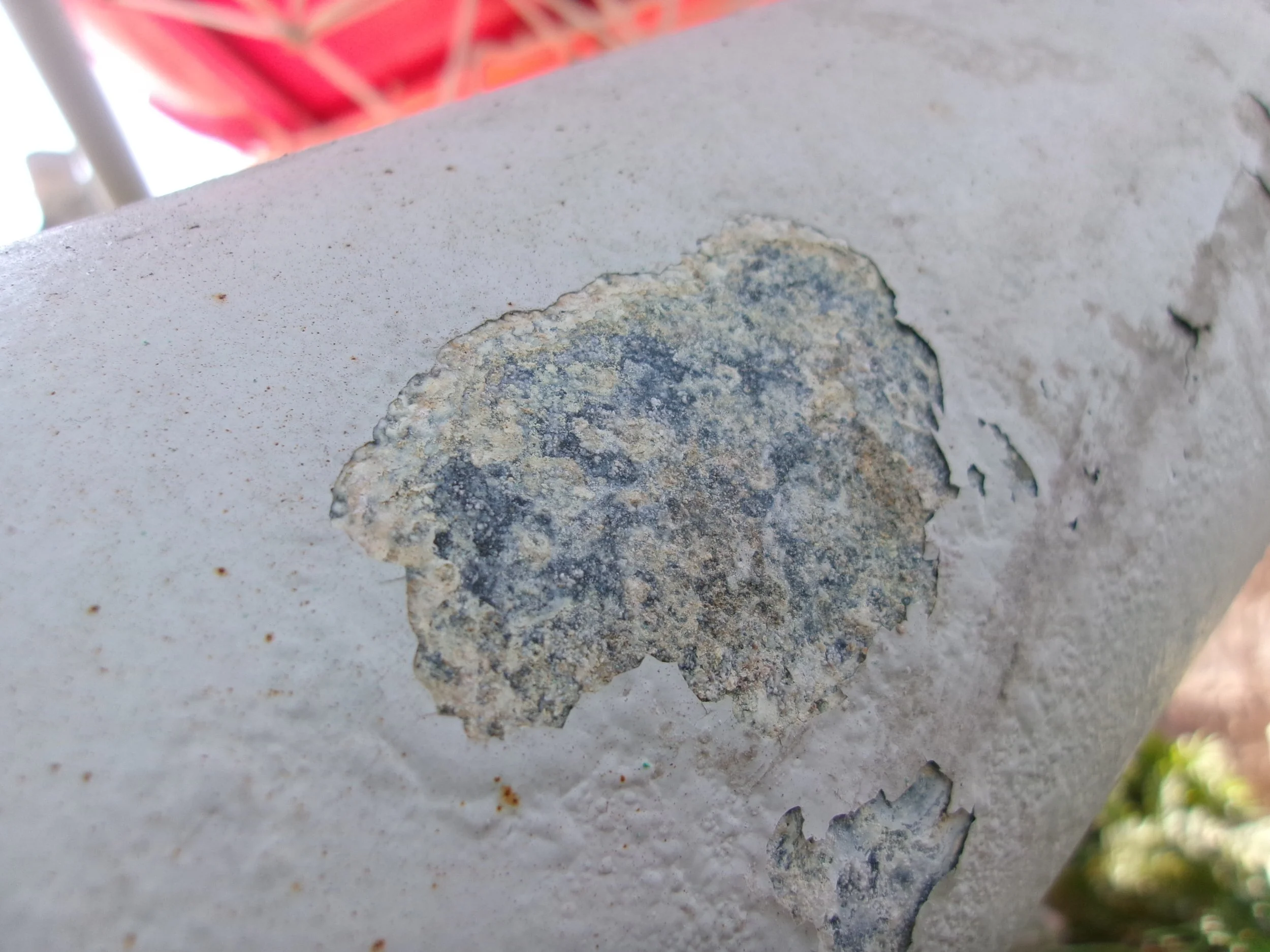
Coating breakdown.
The Solution
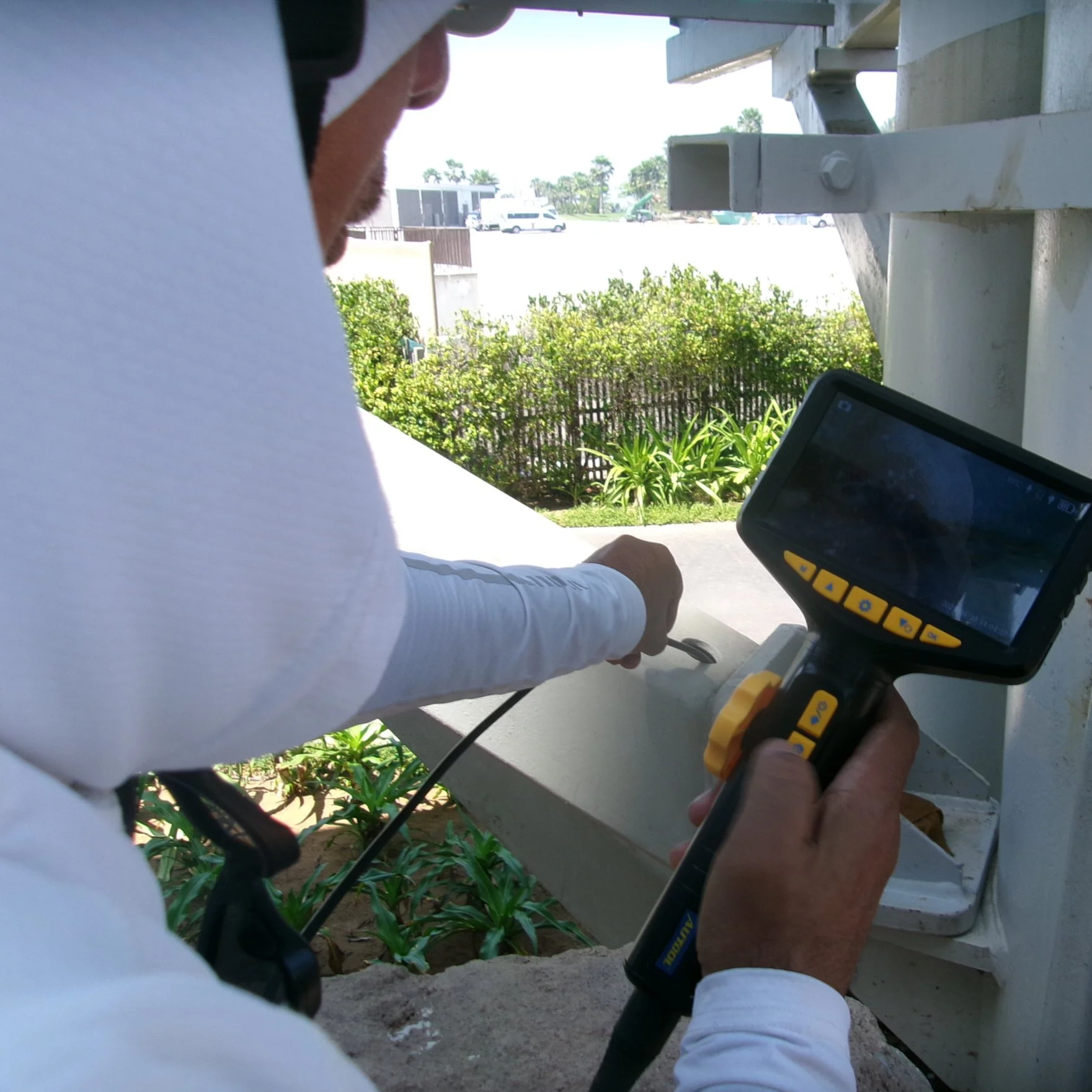
Performing a borescope inspection of internal galvanised surfaces.
Vector Corrosion completed a detailed condition assessment and corrosion investigation to determine the extent and causes of deterioration. The investigation included:
Visual inspection of the support columns and assemblies
Dry film thickness (DFT) testing
Ultrasonic Thickness (UT) testing to identify steel member thicknesses
Coating pull-off testing to assess adhesion
Borescope inspection of internal galvanised surfaces
Laboratory analysis of debris, deposits and waterslide water samples
Testing found that coating thickness was generally above the minimum design requirement, indicating that insufficient coating thickness was not the primary cause of deterioration. Holiday testing identified numerous coating discontinuities, while pull-off testing generally showed good adhesion, with localised low adhesion indicating poor surface preparation and coating repair quality. Borescope inspections also identified minor to moderate internal corrosion within several hollow steel columns.
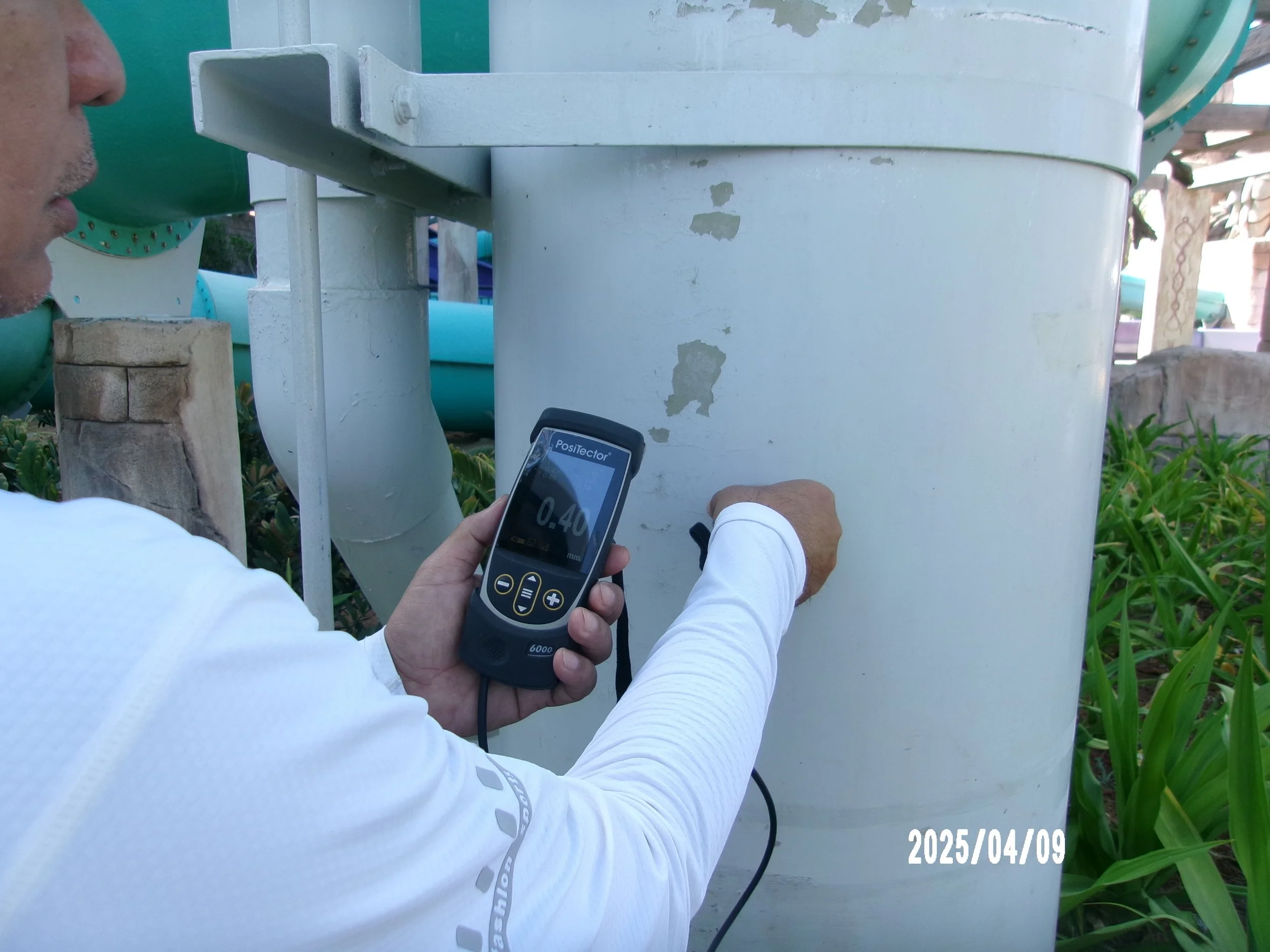
Pull-off testing to assess coating adhesion.
Based on the investigation, Vector Corrosion developed a structured remediation and maintenance strategy that included:
Removing and recoating affected surfaces using a coating system suitable for CX exposure conditions
Repairing damaged hot-dip galvanised (HDG) areas prior to recoating
Treating internal column surfaces with a rust inhibitor through vent and drain access points
Rectifying waterslide leaks and reducing overspray onto the structural steel
Protecting column baseplate fasteners with waterproof tape
Introducing regular pressure washing and inspections every six months
Implementing approved coating procedures and QA/QC controls for future repairs
The Result
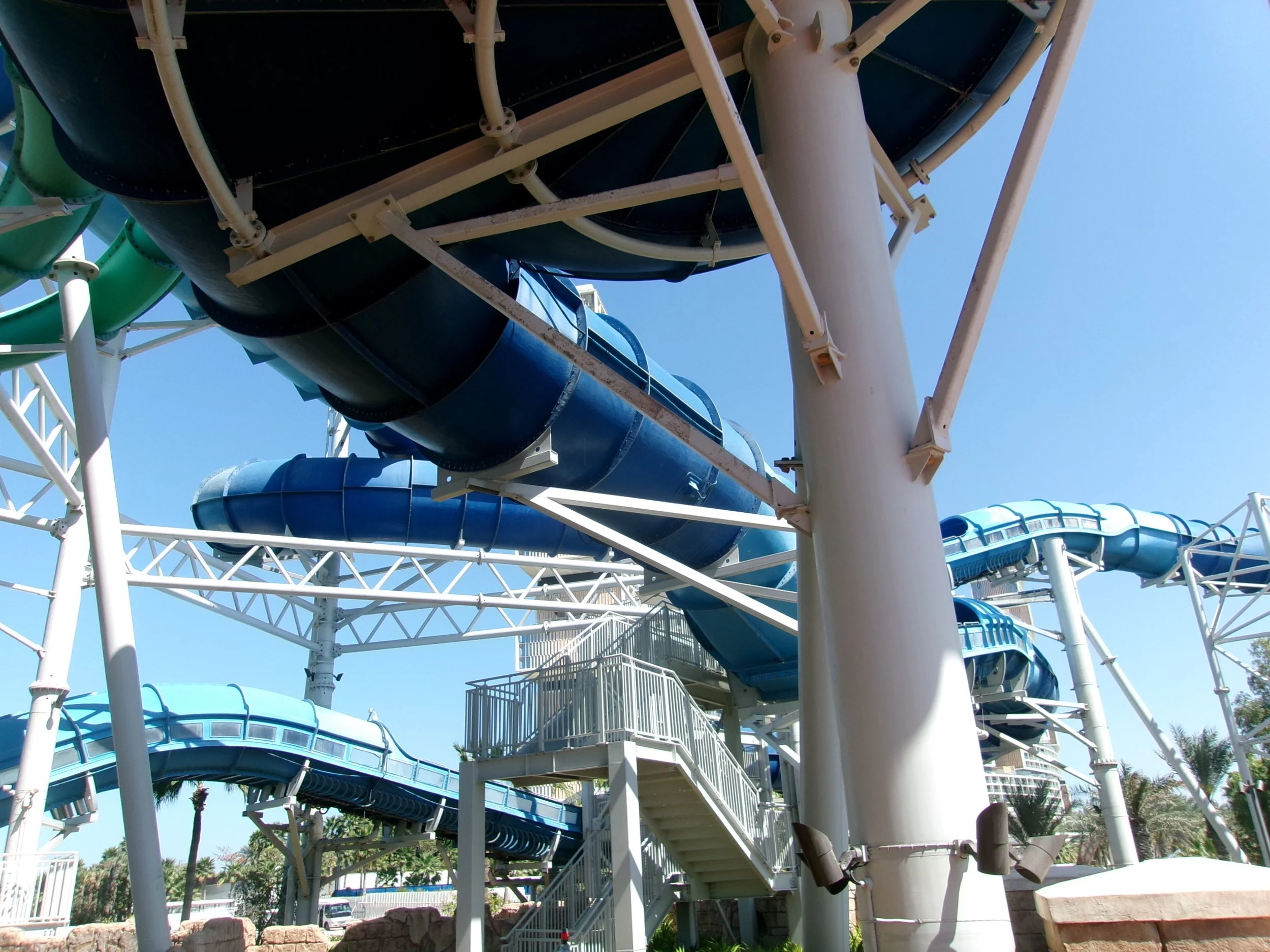
Steel waterslide supports, showing signs of coating discontinuities.
The investigation confirmed that the steel support system remained serviceable but identified that the existing C4 coating system was not suitable for the severity of the operating environment. A more robust coating system suitable for CX exposure conditions was recommended.
The assessment identified continuous wetting, salt contamination, coating defects, inadequate repair quality and internal corrosion as key contributors to deterioration. The recommended remediation and maintenance programme provides a clear strategy to address these conditions, improve corrosion protection and support the long-term durability and reliable operation of the waterslide support structures.